
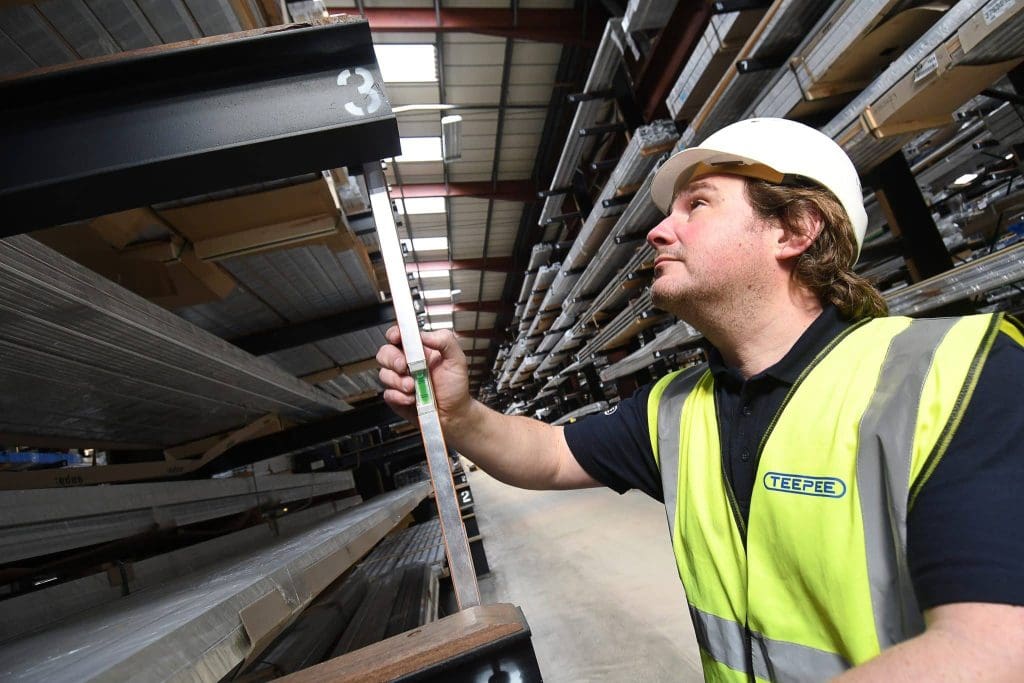
Cantilever Racking Inspections from SEMA-Approved Racking Inspectors (SARI)
Are your cantilever racking systems safe, compliant, and fit for purpose?
If your warehouse or yard uses cantilever racking to store long, heavy, or irregular items like timber or metal sheets, annual inspections aren’t just a tick-box exercise, they’re a vital procedure for protecting your stock and your workforce.
At Teepee Materials Handling, we provide expert cantilever racking inspections carried out by SEMA-Approved Racking Inspectors (SARIs). This certifies that your racking has been assessed by fully trained, competent professionals in line with industry standards, ensuring the safety and compliance of your storage systems.
With over 35 years of experience performing storage equipment inspections, we help to keep your business fully compliant with all industry regulations. Annual inspections from our SARI inspectors helps to safeguard the well-being of your workforce, and keeps your warehouse running smoothly for ultimate peace of mind.
Teepee also offers racking inspection training for your staff, so you can carry out internal inspections inbetween your annual checks.
Why Are Cantilever Racking Inspections Important?
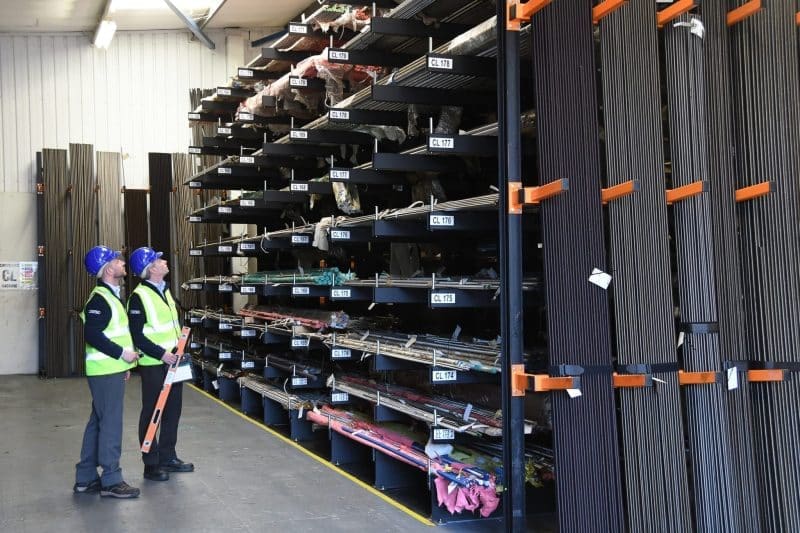
Failing to inspect cantilever racking can have serious consequences. Unlike standard pallet racking, cantilever racks are used to store longer or heavier items on extended arms. Items may include timber, steel sections, panels, or metal pipes, used within industries like manufacturing and builders merchants.
As a result of the additional weight, cantilever racking systems are often exposed to higher structural stress when compared to standard pallet racking. This makes cantilever racking much more vulnerable to sudden failure/ collapse.
Without regular inspections, hidden damage such as bent arms or weak bases can go unnoticed. This creates a real risk of collapse that could cause severe staff injury, or costly damage to your stock or warehouse infrastructure.
This makes regular cantilever racking inspections essential, as without them, you are at risk of missing critical failures which can lead to staff injury, costly damage to stock, and business liability.
Regular cantilever racking inspections help to:
-
Reduce the likelihood of serious accidents or collapses
-
Protect employees and site visitors from falling or unstable loads
-
Prevent damage to stock and warehouse handling equipment
-
Identify early signs of structural deterioration
-
Avoid costly emergency repairs or system replacement
Even seemingly minor issues, such as a slightly bent arm or a loose fixing, can escalate rapidly into serious issues if left unchecked. Teepee’s annual inspections provide the peace of mind necessary for your racking system.
Our SEMA-Approved Racking Inspectors will be able to spot signs of weakness/ structural deterioration early, managing these issues before they escalate into serious problems. This keeps your workforce safe, and your business fully compliant with all Health & Safety Regulations.
Why Is It Important To Choose a SEMA-Approved Racking Inspector?
Not all racking inspections are created equal. The key distinction lies in how the competence of the inspector is assessed and verified.
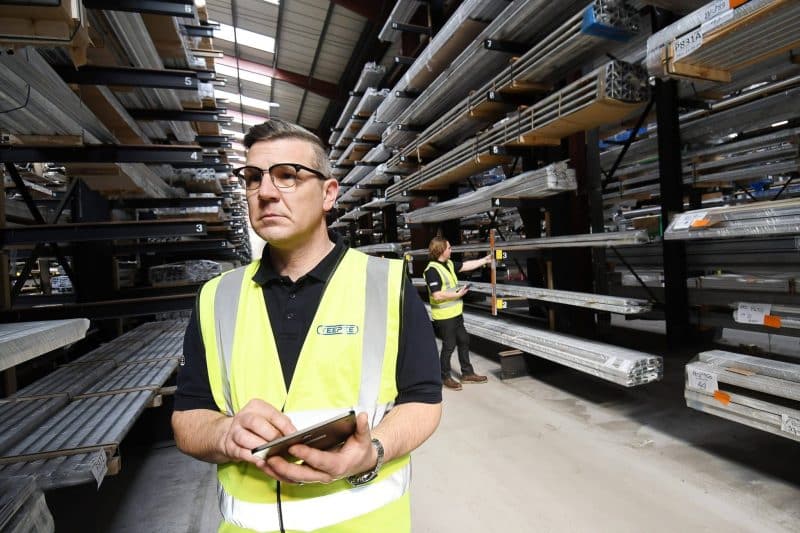
A racking inspector that carries SEMA approval has received formal training and rigorous assessment in the field of warehouse racking inspections. It verifies that they have a deep understanding of racking systems, and the relevant industry standards that surround them. Approval is not a one-off accreditation. It requires ongoing professional development and compliance with SEMA’s inspection requirements.
This level of independent verification provides reassurance that inspections are carried out consistently, and in line with recognised industry standards. It also gives greater weight to inspection reports should they ever be reviewed by the HSE, insurers or auditors.
By contrast, a non-SEMA inspector may have experience, but there is no external system to confirm their competence. This throws doubt on their level of expertise, and therefore the quality of their reports. For businesses seeking to demonstrate proper due diligence, using a SEMA-Approved Inspector is vital.
What Do Cantilever Racking Inspections Look For?
Cantilever racking inspections focus on the parts of the system that keep it stable and safe for storing long or heavy items. Inspectors look closely at the structure itself, as well as how it is being used, to identify any issues that could affect safety or lead to damage.
During an inspection, the following key areas are checked:
-
Arms: Inspectors look for bending, cracks, or signs of wear. Since the arms carry the weight of the loads, any damage here can compromise the entire rack.
-
Columns: These vertical supports are checked for leaning, twisting, or impact damage that could reduce stability.
-
Bases: The base plates and anchorings are examined to ensure the rack is securely fixed to the floor and not at risk of tipping.
-
Bracing: Braces help keep the structure rigid. Inspectors ensure they are intact, not loose, and free from corrosion or other weakening factors.
-
Load distribution: How items are placed on the arms is assessed. Overloading, uneven placement, or excessive overhang can cause bending or collapse.
-
Connections and fixings: Bolts and arm-to-column joints are checked to ensure they are tight and haven’t loosened over time.
-
Environmental factors: Signs of floor damage, repeated forklift impact, or corrosion are taken into account, as these can affect long-term safety.
Each problem identified is rated based on how serious it is, helping decide whether it can be monitored, requires repair soon, or needs immediate action to prevent accidents.
What Is Included in a Teepee Cantilever Rack Inspection?
A professional cantilever racking inspection from Teepee covers every critical aspect of your storage system. It seeks to assess both the overall structural integrity, as well as the finer points of individual components, for a comprehensive solution. Here’s everything that’s included in our racking inspection service:
-
Initial site assessment: Inspectors start by surveying the warehouse to understand the layout, storage patterns, and types of materials stored on the cantilever racks. This helps identify potential areas of concern before a detailed check begins.
-
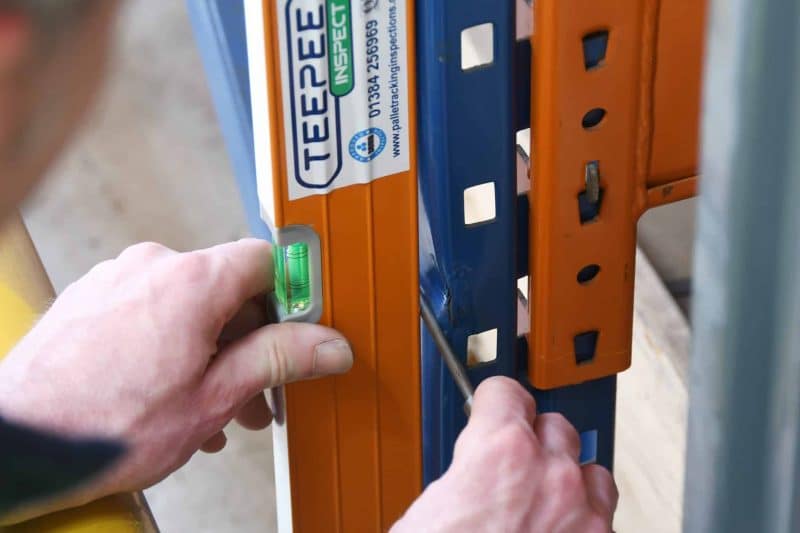
Visual inspection of structural components: The team examines all major elements, including columns, arms, bases, and bracing. They look for visible signs of bending, twisting, cracks, or other forms of structural stress.
-
Load distribution review: Inspectors evaluate how weight is spread across the arms and columns. They check for uneven loading, overhang, sagging items, or products at risk of sliding or rolling.
-
Component-level damage identification: Any minor or major damage is recorded, including bent arms, loose braces, cracked bases, or other wear and tear that could compromise safety if left unaddressed.
-
Risk categorisation: Each issue is assessed using the Red, Amber, Green system, indicating whether monitoring, planned repair, or immediate action is required.
-
Recommendations and remedial advice: Inspectors provide expert guidance on necessary repairs, safe loading practices, and preventative measures to minimise future risk.
-
Reporting and certification: A comprehensive report is compiled, including inspection findings, risk assessments, photographs, and any suggested actions. A certificate of inspection is also issued, valid for 12 months, confirming compliance with SEMA standards and UK safety regulations.
Inspection Training For Your Team
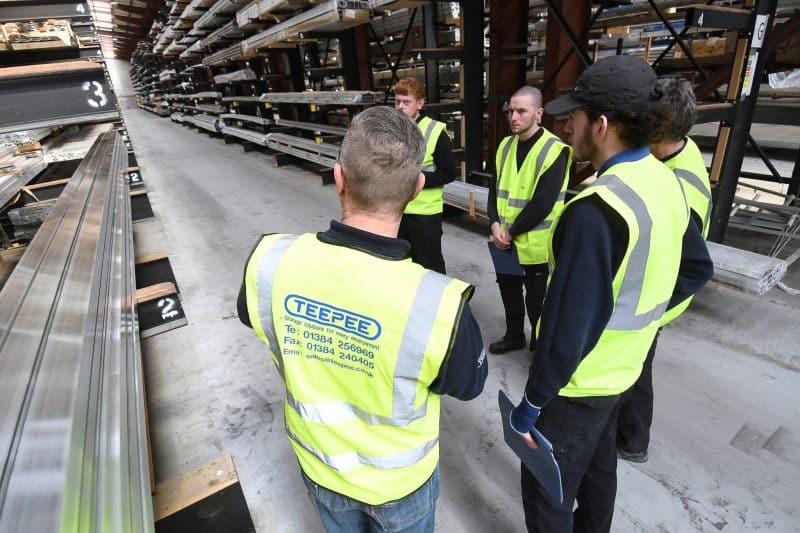
Teepee also offers industry-leading rack inspection training. Our courses are designed to equip your warehouse or yard staff with the knowledge to carry out routine, basic rack inspections.
While this training does not replace the annual expert inspection required by law, it helps staff to identify obvious signs of damage, and ensure safe handling practices are followed day-to-day.
Our courses cover key topics such as spotting bent arms, loose fixings, leaning columns, and signs of impact or overloading. Staff learn how to document observations clearly and escalate issues appropriately, helping your business maintain a safe working environment between professional inspections.
With Teepee’s expert training courses, you can build an in-house culture of safety awareness, supporting your business’ compliance with health and safety regulations.
Why Choose Teepee as Your Inspection Company?
When it comes to keeping your cantilever racking safe and fully operational, choosing the right inspection and support team is essential. Here’s why Teepee stands out as a trusted partner for businesses across the UK:
- Established in 1987, we have built a strong reputation for supporting businesses from SMEs to major blue-chip companies such as Carlsberg UK, Greggs, Hobbycraft, Unipart, and Walkers. View our case studies here.
- Accreditations – SEMA Member – ‘Advanced’ status, ISO9001, and SafeContractor.
- All expert inspections are conducted by SEMA Approved Inspectors, complete with a fully itemised list of any damage.
- Dedicated repair team with access to commonly required components, allowing ‘End Users’ to pre-order replacements and minimise rack downtime.
- Nationwide Service: Based in Dudley, Teepee is an expert cantilever racking installer in the West Midlands. This means we are ideally located to offer a nationwide inspection service from this central base. We can reach your site easily to carry out your inspection, regardless of whether you’re facility is in London, Manchester, Leeds, or anywhere else in the UK.
Nationwide Cantilever Racking Inspections
Get In Touch With Teepee Today
Entrust your cantilever racking and warehouse storage needs to the experienced team at Teepee Materials Handling. We are dedicated to keeping your storage systems safe, fully operational, and compliant with industry regulations, while helping protect your business from potential future costs.
Whether your site is near our base in the West Midlands, around Dudley and Birmingham, or elsewhere in the UK, our expert inspectors can come to you to carry out thorough cantilever racking inspections.
Cantilever Racking Inspection FAQ’s
1. Are Annual Cantilever Rack Inspections Required by Law?
Whilst there is no single UK law that explicitly names “cantilever racking,” broader health and safety legislation places a clear legal duty on employers to ensure that all workplace storage systems are safe and properly maintained.
Regulations such as the Health and Safety at Work etc. Act, PUWER (Provision and Use of Work Equipment Regulations), and the Management of Health and Safety at Work Regulations require employers to regularly assess and manage the risks associated with work equipment.
2. What Legal Duties Do Employers Have Regarding Cantilever Racking?
Employers must ensure that all storage equipment is safe, suitable for use, and properly maintained.
This duty is outlined in laws such as the Health and Safety at Work etc. Act, PUWER (Provision and Use of Work Equipment Regulations), and the Management of Health and Safety at Work Regulations.
3. How Often Should Cantilever Rack Inspections Take Place?
HSE guidance, including HSG76, recommends that racking systems undergo routine checks and formal inspections by a competent person, typically at intervals not exceeding 12 months.
4. What Does A Compliant Inspection Regime Look Like?
A compliant regime combines regular in-house visual checks with an annual expert inspection by a qualified SEMA-approved inspector. Staff monitor for obvious damage like bent arms, loose fixings, or forklift impacts, while the expert review examines structural components, load distribution, and environmental factors.
A detailed report then highlights risks, categorises them using the green/amber/red system, and provides recommendations to ensure safety and compliance.
5. Can My Staff Carry Out Annual Inspections If They Attend a Rack Safety Awareness Course?
No. Awareness courses only qualify your staff to carry out basic, routine monthly racking checks. They do not provide the technical expertise or legal qualification required for a full annual expert inspection, which must be performed by a competent, SEMA-approved inspector.
6. Why Do Inspections Have to Be Completed Annually?
Completing inspections yearly demonstrates due diligence to relevant regulators and insurers. They ensure that any wear or damages are identified early before they become serious risks. Regular checks help prevent accidents, and ensure that storage systems remain compliant with UK legislation like PUWER and the Health and Safety at Work Act.
7. What Is The Difference Between Cantilever Racking And Pallet Racking Inspections?
The main difference lies in what is inspected. Pallet racking inspections mainly focus on beams and pallets, whereas cantilever racking inspections look to inspect the arms, columns, bases, and bracing that supports long or bulky items.
Inspectors also check load distribution and the risk of items sliding or rolling when it comes to cantilever systems. Therefore, while both inspections follow similar safety principles, the critical components and key points of failure differ. And so checklists are tailored accordingly.